The most interesting film you see in Cambridge this year might not be a film you recognise. It might be a nine-minute short by somebody making their first serious attempt, a documentary from a country you've never visited, or an old silent thriller with a musician bringing its heartbeat back to the room. The titles aren't necessarily on the posters outside the multiplex. They live in a quieter calendar, if you know where to look.
Cambridge has a small but surprisingly connected film culture: an arthouse cinema with year-round special programming, one of Britain's long-running film festivals, a student film festival that welcomes the public, visiting Japanese cinema programmes, and free screenings that turn libraries and community buildings into places to watch together.

The short answer: where to look for the good stuff
| What you're looking for | Where to start | Price pattern |
|---|---|---|
| A film you've never heard of, showing this month | Arts Picturehouse, its Discover, Docs and reDiscover selections | Normally ticketed; concessions and clubs |
| An international premiere or filmmaker Q&A | Cambridge Film Festival, 22 Oct–1 Nov 2026 | Ticketed festival; accessible screenings and special events |
| Free films with your neighbours | Film Trust community screenings and city cinema nights | Some free events; dates and limited places vary |
| Student shorts and tomorrow's filmmakers | Watersprite Film Festival | Free events and screenings, booking often needed |
| Japanese films outside general release | Cambridge Japan Fest / Japan Foundation | Special programme tickets, annually subject to confirmation |
| A gentler family screening | Family Film Festival / relaxed screenings | All seven 2026 Family Film Festival screenings and pre-film crafts are free; other festival events may be paid. |
1. Arts Picturehouse: the calendar hiding behind the regular releases

The Arts Picturehouse sits at 38–39 St Andrew's Street, with three screens and a café-bar above the rushing city centre. It isn't a small independent cinema in the ownership sense: Picturehouse is a national chain. But its Cambridge programme is the most reliable year-round starting point for people who want to see what a mainstream release calendar leaves out.
The trick is to stop looking only at the top three listings. Watch for Discover, preview screenings of unusual films and new international work; reDiscover, older films returning to a proper screen; Picturehouse Docs; Screen Arts, where live and recorded theatre, opera and music sit alongside cinema; and special events labelled Q&A or subtitled.
For a real example rather than vague advice: the October 2026 listings include a Kiki's Delivery Service Kids' Club screening on Saturday 17 October, a reDiscover screening of The Zone of Interest on Sunday 18 October, and a filmmaker conversation around the Syd Barrett documentary Have You Got It Yet? on Friday 9 October. Not every old or international film plays for a long run. If something interests you, check its precise date and booking page.
Kids' Club screenings are for children with parents or carers, not for adults coming alone to watch anime. U25 discounts are available to registered 16–25-year-olds when booking online or in the app; Silver Screen offers discounted tickets for over-60s on selected weekday screenings; none of this means all arthouse screenings are free. The cinema lists its current arrangements on its information page.
It's worth arriving a little ahead of time to find the right screen and settle in. A late-night foreign-language film followed by the walk back through Cambridge is an experience quite different from watching a thumbnail in a streaming queue.
2. Cambridge Film Festival: eleven days when the city becomes a different cinema

The 45th Cambridge Film Festival runs from 22 October to 1 November 2026, with Arts Picturehouse as the central venue and events at partner locations. Founded in 1977, the festival doesn't only assemble titles that might otherwise reach Cambridge next year. It brings international features, short-film programmes, documentaries, restorations, guests and public discussion into the same week.
There's a tangible difference between scrolling through films and stepping into a room where a director has flown in to introduce one. A film becomes a conversation with an audience that may disagree about it, rather than a private recommendation you can dismiss with a thumb gesture. This is also why a festival can be worth attending even if none of the filmmakers' names are familiar.
A real 2026 festival evening to build around
The official programme has I See Buildings Fall Like Lightning opening the festival at 8:20 pm on Thursday 22 October. Clio Barnard adapts Keiran Goddard's novel about five friends whose Birmingham council estate has been demolished, and the director is scheduled for an in-person Q&A on opening night. A second screening is listed on Friday 23 October at 6 pm, with an introduction rather than the same Q&A. Those aren't interchangeable tickets if the conversation is what draws you.
A festival is also a beautiful place to try things you wouldn't otherwise book. Its shorts programme includes Cambridge Connections, films from around Cambridgeshire scheduled on 25 and 29 October, and collections such as Shorts: The Ties That Bind, six films exploring family, belonging and unexpected relationships, scheduled on 26 and 28 October. One of those shorts, Saba, describes a gravity-reversed world and a bond between a grandfather and his grandson. You can experience an entire unfamiliar filmmaker's imagination in ten minutes.
For an older classic, the festival is also presenting Alfred Hitchcock's silent The Lodger on Tuesday 27 October, with an introduction, and a 45th-anniversary screening of Portrait of a Lady on Fire on Sunday 25 October. It would be a mistake to describe the festival as nothing but new independent debuts. Sometimes the point is finally seeing something extraordinary in a cinema again.
The important rule that catches first-time visitors
Unlike a normal cinema programme, festival films start at their advertised time without advertisements or trailers. If your ticket says 8:20 pm, it means the actual film or event starts then. That detail, published in the festival's visitor guide, is much more useful than advice to 'arrive early' with no explanation.
Search the official 2026 programme by date and title, then use the particular film's booking page. Where a filmmaker is listed as appearing, check the named screening. Plan extra time for post-film discussion and remember that special festival screenings are generally ticketed. A press pass, festival membership or volunteer role is not automatically available to ordinary attendees, and none is necessary to buy a public ticket.
3. The films you can watch for free, with people who live nearby
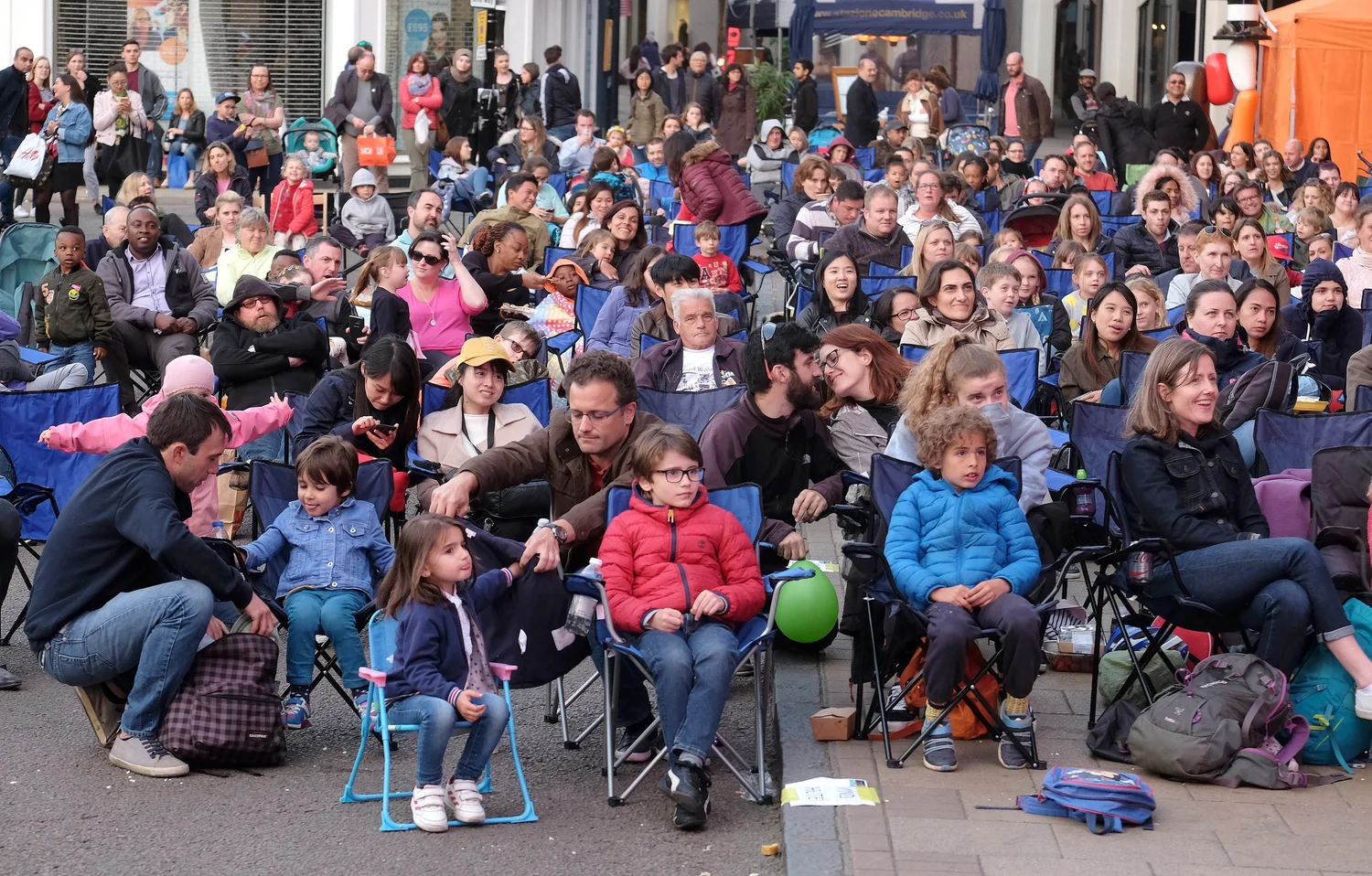
This is the part that deserves more attention in Cambridge cinema guides. Film culture doesn't belong only to buildings with a box office. The Cambridge Film Trust has been taking screenings to community spaces, while the city itself has a history of outdoor film nights. They are not the same programme, but they share the simple idea that people can gather to watch together without making an expensive evening of it.
In 2026, the Trust's 45th-anniversary calendar included a free indoor screening at Clay Farm on 28 July and a free outdoor event at Brown's Field Community Centre on 27 August. On 27 September it held free family screenings of The Tiger Who Came to Tea at Cambridge Central Library's Everyspace Community Hub, with half an hour of crafts before the 24-minute film. The library offered two sessions, each with only 40 spaces, so advance booking was sensible.
Those July, August and September screenings have already taken place as of this article's October 2026 publication. We mention them as concrete evidence of the programme and the kind of event to watch for, not as something you can still book. Follow the Trust's announcements rather than an out-of-date city-events roundup.
The Trust says its community outreach takes films into neighbourhoods including Abbey and King's Hedges, working with local councils, schools and grassroots groups. Its charity work supports free public screenings, the Youth Lab and other creative activities. That is worth remembering when somebody assumes a film festival is only a week of expensive gala seats. The Film Trust's public information shows a larger local purpose.
What about an outdoor cinema in Market Square?
Cambridge BID's Cinema Nights has brought big-screen events to Market Square and the CB1 area by the station. Its online schedule currently displays 2025 dates, including Paddington in Peru and The Wild Robot; it does not confirm an equivalent future screening tonight or an up-to-date 2026 series. The photo above shows an earlier Cambridge BID community event, not one of this summer's Film Trust screenings.
For future outdoor cinema, look to the organiser's current event announcement for whether chairs are provided, what happens if it rains, whether booking is needed and what the film's rating is. Don't assume every big-screen advert means free entry, or that you can arrive after the film starts and still find a space.
4. Watersprite: the festival for films from people who haven't become famous yet
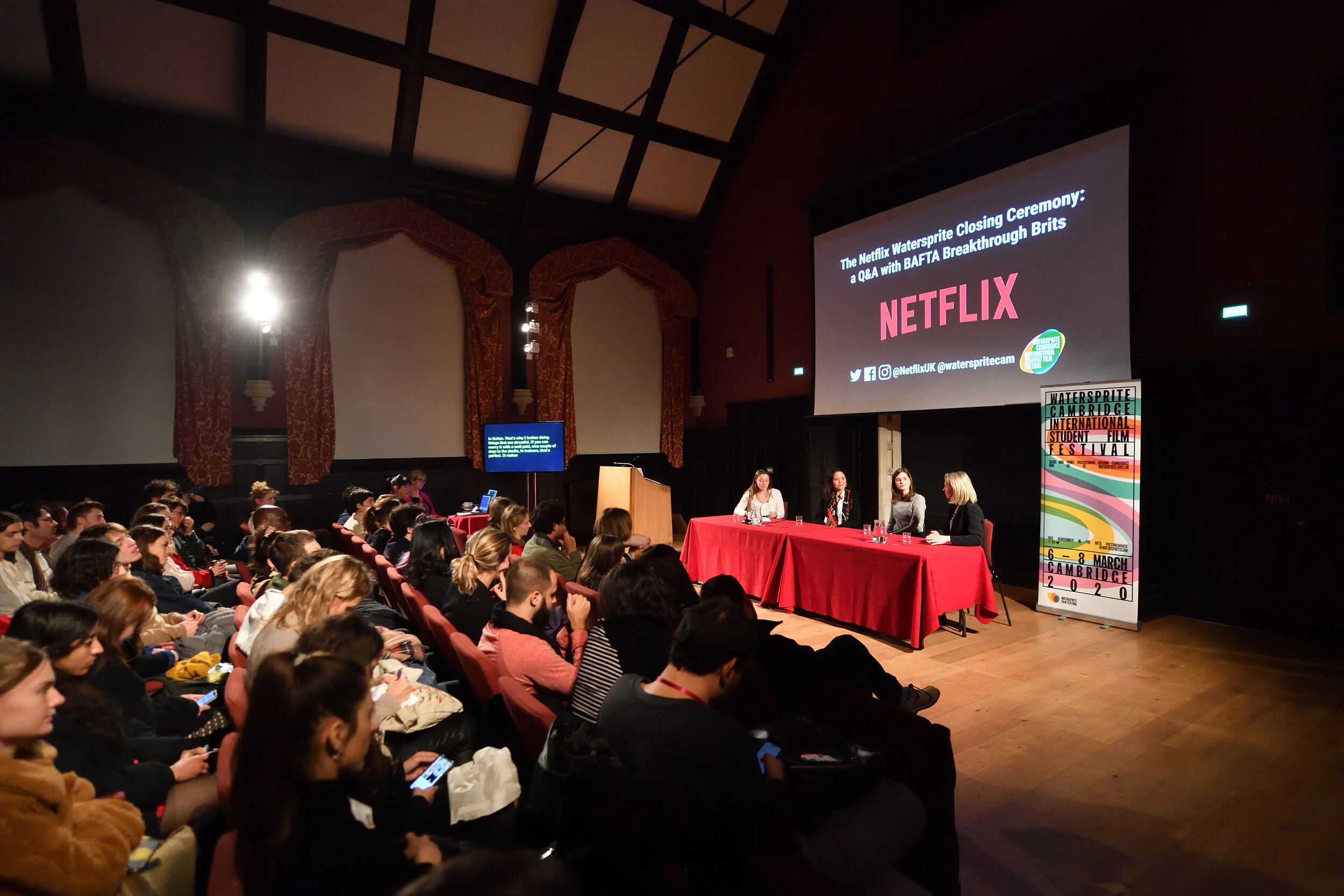
Watersprite has been championing international student filmmakers since 2008. It is largely organised by students, and its public programme gives audiences a wonderful opportunity to encounter the people making the first or second film of a career rather than the fifteenth. In March 2026 the festival ran in Cambridge and online, showing student shorts and hosting industry conversations.
The difference between Watersprite and the October festival is interesting. Watersprite is about finding emerging voices while there is still very little commercial machinery surrounding them. You might watch a stop-motion experiment, a short documentary or a piece of fiction that wouldn't fit neatly into any streaming platform category. Then you may hear the filmmaker talk about the camera, money or mistake that shaped it.
Its Creative Futures programme ran free monthly screenings around the theme of 'Home' in the months leading up to the 2026 festival, open to everyone but especially aimed at students and young people. Tickets were booked through the event links shared by Watersprite. The festival's March 2026 Creative Futures Day included career workshops, technical talks and a chance to meet people working in film; that specific day has passed.
The next Watersprite festival is advertised for 5–7 March 2027. Its official site is the right place for the future programme and online access details. Students looking for creative industry involvement can also explore volunteering and organising opportunities, but you don't have to be a student filmmaker just to enjoy its public screenings.
Something unusually lovely about Watersprite is the absence of polish as a requirement for an interesting idea. A short film may be awkward or unfinished in places. You can still leave thinking about it for days. That's a different kind of discovery from finding a film with thousands of online reviews.
5. Japanese cinema in Cambridge: a festival worth remembering between seasons
For anyone who loves Japanese film, especially the kind that isn't guaranteed a wide UK release, a useful discovery is Cambridge Japan Fest. The 2026 programme brought the Japan Foundation Touring Film Programme into West Court, Jesus College, with Cambridge screenings across February and March under the theme Knowing Me, Knowing You: The True Self in Japanese Cinema.
The University of Cambridge programme included regional premieres and films such as Teki Cometh, Strangers in Kyoto, Silence of the Sea and Ghost Killer. The 22 March group required booking, with an indicated event capacity of 100. Other days offered films with a very different tone, from comedy to social drama and award-winning fiction.
This wasn't a permanent Japanese cinema hiding in a college. It was a scheduled public cultural festival, and its March 2026 dates have passed. Save the official Japan Foundation touring programme and the Cambridge Festival listings for the next edition. That's the way to catch the rare one-off screening before it disappears from the calendar.
And Japanese animation isn't limited to this touring festival. The Arts Picturehouse's October 2026 listings include a Kids' Club screening of Studio Ghibli's Kiki's Delivery Service, although that particular show is for families with children. If you enjoy films in the emotional territory of Your Name, Suzume and Weathering with You, monitoring special cinema listings and festival programmes is more reliable than expecting every film to return in a standard theatrical release.
6. Film evenings that aren't designed for only one sort of audience

Good cinema isn't always everybody sitting motionless in a perfectly dark room. Cambridge Film Festival's family programme has relaxed screenings, where the lights remain at a low level, volume is reduced and people can move, step outside or take breaks as needed. The festival's published accessibility information says all Family Film Festival screenings in the 2026 programme are relaxed. And the whole 2026 Family Film Festival is free. These are public screenings you can attend without buying a regular cinema ticket, not just discounted matinees.
Seven films, seven free mornings at Arts Picturehouse
For October 2026, the festival has published a surprisingly generous free programme at Arts Picturehouse. The screenings are all at 11 am, with free arts-and-crafts activities in the cinema restaurant beginning about an hour earlier. The relaxed format means lower volume, some house lighting, and permission to move or take a break. Unlike the ordinary commercial Kids' Club restrictions mentioned elsewhere in this guide, these events are described by the festival as its free public Family Film Festival; check the individual ticket conditions and suitability for your party.
| Date, 2026 | Film | Why you might choose it |
|---|---|---|
| Sat 24 October | Beauty and the Beast | Disney's animated musical, back on the big screen for its 35th anniversary. |
| Sun 25 October | The Secret Garden | A quieter, green and slightly mysterious classic about belonging. |
| Tue 27 October | Wicked | The sing-along screening, for a more exuberant morning. |
| Wed 28 October | Ron's Gone Wrong | A scruffy little robot and a story about friendship in a connected world. |
| Thu 29 October | Little Women | An ensemble family story, a world away from blockbuster spectacle. |
| Fri 30 October | Freakier Friday | Body-swapping comedy with generational misunderstandings. |
| Sat 31 October | Addams Family Values | A particularly fitting oddball family film for Halloween morning. |
That's a real run of free public cinema, and it belongs at the centre of a Cambridge film guide. The programme is confirmed on the festival's Family Film Festival page. The fact it's free doesn't guarantee seats will still be available: use the official booking links, check age ratings for your group and don't assume you can stroll into a full auditorium on the morning. The earlier library screening of The Tiger Who Came to Tea was a separate, September event and has already passed.
There's something lovely about the festival putting this on in an actual cinema, complete with a pre-film creative hour, rather than treating public-access film culture as something that only happens in a spare room or as a charity afterthought. A child can watch an old favourite on a proper big screen, perhaps for the first time, without a parent having to price out the tickets first.
The organisation also offers selected screenings with descriptive subtitles, BSL-interpreted introductions and Q&As, and accessible seating. Its accessibility page gives practical instructions for wheelchair spaces, the Arts Picturehouse lifts, hearing assistance and who to contact for BSL seating. Not every screening provides every accommodation; choose the marked event that meets your needs and confirm directly.
The free September library session for The Tiger Who Came to Tea shows another possible shape of a family film outing: crafts, a short animation and the chance to watch with other children rather than committing to a two-hour feature. That event has finished, but the structure is worth remembering when the Trust announces its next family screening.
Before booking a film you know little about, check the certificate and the festival's content guidance. Not all independent films are gentle or suitable for young audiences, even when their posters are beautiful. The festival's programme provides age ratings and content notes, often without spoiling the story.
A little 2026 watchlist for the adventurous
| Film or programme | Confirmed screening | Why it stands out |
|---|---|---|
| I See Buildings Fall Like Lightning | 22 Oct, 8:20 pm; 23 Oct, 6 pm | Opening-night Clio Barnard Q&A on 22 Oct; second screening has an introduction. |
| Cambridge Connections | 25 Oct, 1:05 pm; 29 Oct, 11:30 am | Short stories rooted in Cambridgeshire, made by local filmmakers. |
| Shorts: The Ties That Bind | 26 Oct, 10:40 am; 28 Oct, 11:15 am | Six short films crossing countries, families and genres. |
| Portrait of a Lady on Fire | 25 Oct, 3:20 pm | A 45th-anniversary return of an extraordinary modern film. |
| The Lodger | 27 Oct, 3:45 pm | Hitchcock's early silent thriller, with an anniversary introduction. |
| Kiki's Delivery Service | 17 Oct, 10 am | A Studio Ghibli Kids' Club screening, exclusively for children with adult carers. |
These dates are a checked October 2026 snapshot, not an automatically updated timetable. Screening times, sold-out status, guests and films can change. Check the official booking page before setting off.
If you have only one evening, how do you choose?
For the unexpected film: choose something from the festival programme that doesn't have a giant publicity campaign around it. Read its synopsis, certificate and content notes, then buy a ticket without watching five trailers. A good festival is an invitation to trust a curator for a couple of hours.
For a conversation: prioritise a ticket that specifically lists a filmmaker Q&A, and allow enough time afterward to stay for it. The 22 October opening night is one concrete example, but there are many others in the festival's official listings. A director in the room can make a difficult film unexpectedly approachable.
For free public cinema this October: try the seven Family Film Festival mornings first. They're actual 2026 free screenings at Arts Picturehouse, with crafts beforehand. For future community events outside the festival, bookmark the Film Trust's announcements, the Central Library event listings and Cambridge BID's current cinema-events page. Don't plan your evening using a previous year's outdoor schedule. Small community events can fill up faster than their publicity suggests.
For animation or international film: watch Arts Picturehouse's special programming and seasonal touring events such as the Japan Foundation. If the show is Kids' Club, remember that lone adults cannot attend. A regular specialist screening or festival programme will be the better choice.
Making a little home for cinema when you're not at the cinema
If a film catches your eye, Calphii's Inbox can hold a little watchlist with dates and booking links, and Visuals can give your browsing a calmer, more colourful atmosphere.
If a filmmaker has shared an interview or short film on YouTube, the Listen widget can play compatible YouTube content alongside your notes, even as a media background when that suits the room. Calphii's audio choices and ambience controls can help you settle into a listening space for a soundtrack or conversation. It's a lovely way to return to a discovery later, with YouTube embeds replace authorised full-film screenings.
There's another connection to the people drawn to niche cinema. Calphii's indie-games writing and artist-made pixel-world guide come from the same belief: small creative things deserve our time and attention. A 12-minute student film, a curious Japanese drama or a first-time director's rough-edged experiment is worth considering without needing a huge algorithm to recommend it.
A city full of stories, if you know the doors
The cinema itself isn't the secret. It's finding out that a familiar Cambridge street sometimes holds an unfamiliar film, that a student filmmaker from another country might be here to answer questions, or that a library room can fill up with families watching the same short animation together.
You don't need to become the sort of person who knows every director at Cannes. You just need to look a little beyond the familiar titles, book one public screening, and see what somebody else has made.