Most people learn to draw by drawing things. Not a masterpiece, not a perfectly lit studio still life, just a crooked column, a face on an old sculpture or the way a doorway sits against a wall. Cambridge is full of things worth looking at closely, and you don't need to enrol in a class to begin.
This is a guide to taking a small sketchbook out for an afternoon, with free museums, outdoor subjects and the places where you need to check the rules before opening a pencil case. It isn't advice to set up an easel in a busy passageway or ignore museum staff. A pencil and a little consideration will take you surprisingly far.
The smallest kit that actually works
A pencil, an eraser and an A5 or smaller notebook are enough. Bring something to lean the book against if you prefer not to sit on the floor. Indoors, leave liquid materials at home: the Fitzwilliam explicitly prohibits ink, wet colour, pastels and oils in its galleries. You also don't need a complicated set of pens or a watercolour box simply because an internet artist says their kit is essential.
1. The Fitzwilliam Museum: start with one object
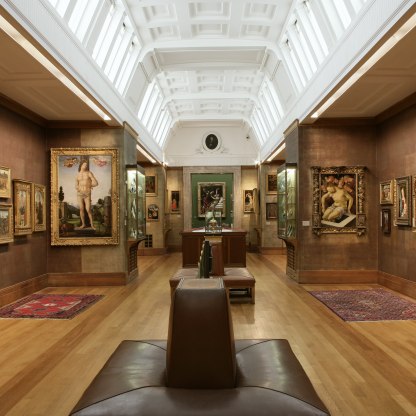
The Fitzwilliam's official visiting guidance says sketching in the galleries is encouraged when they aren't too busy. That is a wonderful invitation, and refreshingly unambiguous. The permanent collection is free to enter; special exhibitions may require paid tickets.
Choose a single vase, a frame or one sculpture rather than trying to draw a whole spectacular room. Give it ten minutes. Look at its outline before the surface details, then notice where the light falls. If a gallery becomes crowded or a member of staff asks you to move, pack up without fuss. This is a shared public collection, not a private studio reservation.
The museum opens Tuesday to Saturday 10 am–5 pm and Sunday noon–5 pm, with Monday closed according to its published schedule. Check any holidays before going, and remember that the attraction here isn't the whole building. It's the permission to stand still and really look at something.
2. The Museum of Classical Archaeology: faces, folds and impossible poses
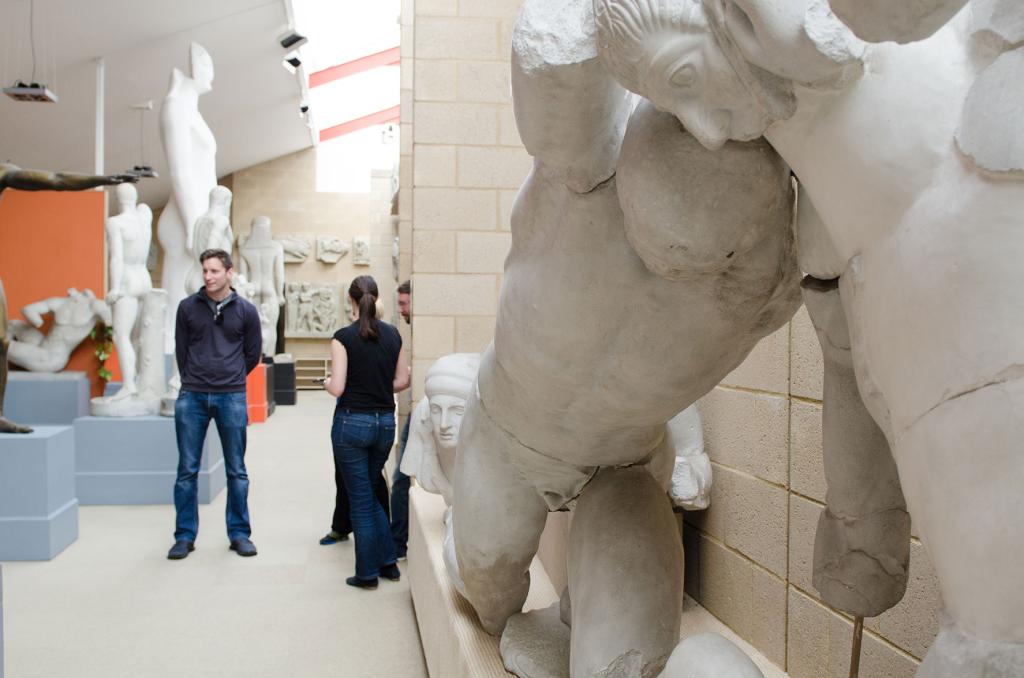
If you want to practise shape and proportion, consider the Museum of Classical Archaeology on the Sidgwick Site. Its huge Cast Gallery is full of plaster reproductions of Greek and Roman sculpture. You can compare the way different artists handled a face, a draped garment or a figure standing at an odd angle.
The gallery is free to enter. Ordinary public opening is Tuesday–Friday 10 am–5 pm, with Saturday afternoons during university term, and it's closed on Sundays and Mondays. You can reach the first-floor gallery by lift via reception. It's a working teaching museum, so ask staff about sketching on the day and whether there are restrictions on where to sit or which materials to use.
The museum sometimes runs its own drawing and 'Drink and Draw' activities, but those are separately scheduled events, not a promise of an instructor every afternoon. There is real value in trying the room quietly on your own.
3. Kettle's Yard: learn to draw a room with almost nothing in it

Kettle's Yard is a very different lesson in looking. The arrangement of furniture, art, stones, plants and spaces makes the building feel like a lived-in work of composition. A chair and a patch of natural light become as interesting as an elaborate painting.
Be careful with the distinction between the free temporary exhibitions and the ticketed house. Adult entry to the house currently has a charge, with some concessions and free entry categories, and an exhibition ticket doesn't include a house visit. So the house itself is not a guaranteed free sketching stop.
You can use the exhibitions as visual inspiration when they are open, but don't assume drawing materials or prolonged sketching are permitted in every space without checking with staff. And outside, you can always sketch the setting or a detail of the surrounding streets from a suitable public spot without claiming to be in a free class.
4. The architecture itself: free shapes that won't move

Back outside, Cambridge has become a different sort of life-drawing class. The Fitzwilliam's huge columns are excellent for studying repetition and perspective. The old passages near King's Parade offer small doorways, rooflines and wonky angles. A bridge or a row of bicycles is a good challenge if you're trying to capture rhythm rather than precision.
The trick is not to choose the most difficult skyline available. Try drawing just the negative space between two buildings, or the shadow beneath one window. Don't stand in a cycle lane, block a pavement or spread your things across steps people need to use. A small pocket sketchbook is made for this kind of wandering.
5. Green places: trees, water and people walking past
For something softer than stone, try an open public space such as Jesus Green, Parker's Piece or an accessible riverside path. They're better for ten-minute drawings than a complex composition with a dozen buildings. You can sketch a tree's branching structure, the ripples in water, or the outline of somebody reading at a distance without making them the unwilling subject of a prolonged portrait session.
The Cambridge University Botanic Garden is another beautiful place for plant drawing, but adult admission is paid unless you qualify for free entry. Don't let a 'free sketching' roundup quietly smuggle a ticketed garden into its list. Your neighbourhood tree has just as much to teach you.
A two-hour sketchbook route
| First half hour | Fitzwilliam Museum: choose one gallery object, and draw its outline before the detail. |
|---|---|
| Next twenty minutes | Outside on Trumpington Street: make a quick architectural study from a safe place off the main flow of pedestrians. |
| Middle of the afternoon | Walk west towards the Sidgwick Site for the Classical Archaeology Cast Gallery, if open. |
| Last stop | Sit in a public green space and draw a tree. Compare how differently a living thing and a sculpture hold their shape. |
Some galleries get busy, so it's worth having a quieter alternative in mind. Sketching should make you more aware of the people around you, not less.
Why drawing badly is still worth doing
A first sketch doesn't need to become a social media post. It can be fifty lines that remind you of a quiet afternoon. Sometimes the thing you notice after drawing an object for ten minutes is something you would never have noticed in a photograph: how the curve actually bends, the weight of the shadow, the little mistake in a symmetry you had assumed was perfect.
If you want to make a small creative routine around the habit, Calphii's Inbox can hold a list of things to sketch next, and a Deep Focus session can give you a gentle boundary for drawing at home. Its Visuals can make a cosy workspace for reference images and notes between drawing sessions. The sketchbook itself is the good part.
The city is full of things that would benefit from being looked at for more than three seconds. Take one pencil, choose one of them, and give it a little longer.